the crowning glory of beauty and conflict

The world news stations tuned into the Mrs World pageant held in Sri Lanka around Easter in 2021. Two years before this, the island captured the world’s attention. The deadly Easter bombings destroyed lives around the country in churches and high-end hotels.

It is three years since I first wrote of this news item. Recent events in my own life made me re-visit it with renewed interest.

Crowning glory…

Beauty contests, though some may perceive as a dated idea, have their place in society for those seeking fame and fortune. This beauty contest followed the usual pattern. The reigning champion, a Sri Lankan, crowned the new winner. The cameras zoomed in on the beaming winning candidate. At that moment, the same lady who crowned her returned to the stage. She boldly announced that the winner was a divorcee, therefore, the winner was not eligible to hold the crown! She approached the lady and removed the crown and announced the first runner up as the winner. The momentarily crowned lady was left startled and exposed to humiliation.

The most surprising aspect was the gleeful acceptance of the crown by the first runner up. She did not seem to have any compassion towards the lady from whom the crown was snatched. Unbelievable sequence of events which brought about a furore of opinions that hit the national and international press around the world.

I am not writing this to put any wrongs to right of a beauty pageant. If not for this incident, most of us will not have even heard of this competition. The contest in question will have its rules and processes which would have dealt with the incident.

Beauty and conflict

A trait became apparent to me as I watched this unravel. It permeates through every level of society. We see it in day-to-day life in this multi-cultural, multi-faith country even in the 21st century. Women in general have lower social recognition.  In addition if a woman does not meet the cultural expectations that society demand of her, she can be ranked even lower.

A woman is deemed to have less value if she is single for whatever reason. She may be unmarried, divorced, separated, or widowed. Society values a woman with a husband more. Similar value is attributed to married women without children. In a patriarchal society, a woman gains validity only if she is affiliated with a man. Her fertility also plays a role in this perception. For a country that raised the first woman Prime Minister in the world, this can be an alarming fact to take in. Women in such life situations have no respectful place in society and gatherings like weddings and coming of age ceremonies.

The purity of a woman who has lost her husband and remains unmarried is usually met with suspicion. If one is divorced the woman even becomes a social target. This rejection although at times subtle and nuanced, can be deeply cutting and debilitating for the woman concerned. It can even take the form of overt physical and verbal insults or even assault.

A personal viewpoint…. 

I write with the pain of having faced the consequences of being a divorcee and a single mum in the last 25+ years. The value attributed to me and my family unit dropped to the lowest levels. This caused so much pain and distress. The length at which people went to discredit me and cast undue bad light on my character or criticise me as being a ‘social disgrace’ was deeply hurtful.  Especially when it was directed by close family. I struggled to understand this when I put things in the context of our shared Christian faith.  I am not concerned about my feelings towards those who rejected me. Instead, I question what drives otherwise reasonable human beings to act in such a way.

I witnessed the events of the beauty pageant in question. This allows me to be more aware of the reasons behind such acts. Shaming someone who does not meet the expected standards in society is common. Communities make it worse when they inflict it on a chosen target. 

Here’s a story that illustrates cultural expectations. These expectations make people act in ways that are harmless on the surface . Yet, they yield unintended consequences which can be perplexing.

In this culture, when a younger family member gets married, an older female sibling usually performs various cultural acts. She is already married and aims to bring about prosperity and fertility to the couple getting married. Even Christian families perform these rituals that are harmless on the surface, to be culturally relevant. At a point in life, I was married but without child, I was not permitted to take part in my due role at a ceremony as the elder. This was because of my childlessness; although it was not expressly stated. It was instead given to a younger relative who was married and had a child.  

At the time, I felt the pain that the honour that was mine as the elder relative being taken away. But I got over the social and cultural humiliation directed at me. However, what unravelled later in the lives of those involved made me stop. It led me to consider these actions and their consequences. 

Playing with culture ignoring godly values can be dangerous. But are we even aware that we are doing this?

Honour related choices and unintended consequences…

Despite all the cultural rituals being followed and a church blessing conducted, the wedded couple was sadly not blessed with children. He was the only male in that generation to carry on the genealogy of the family. It is sadly now not to be. There was a twist in the tale. A couple of years later, I discovered my perceived barrenness was proven wrong. I was blessed with two sons. The irony of the tale unfolding was too confusing to witness.

What if… I was given the place of honour despite my childlessness as the elder relative to perform my role, out of kindness – would this male relative be blessed with a child?  We simply don’t know. When we profess a faith in the Almighty God and play with culture without consideration of the value of the other, we play with fire.  I believe God honours culture within his laws of love and consideration extended to one another. What the world perceives as wholesome can be quite the opposite in God’s economy. He loves the widow and the orphan. The woman who is waiting to have a child, like Hannah or Ruth who was widowed.

The culture in which we operate, forms our values and opinions on how we do things and treat each other. 

Looking back trying to make sense…..

My parental generation were the first young adults of the post-colonial era.  During the immediate post-colonial times the Sinhalese people felt the desire to re-align their cultural identity.  This identity is intrinsically entwined with the prevailing culture.  Customs, rituals and superstitions handed down from a mainly patriarchal society continue to remain and thrive if not seen through the lens of Christian spirituality. Sinhalese Christians are a minority on the island although the Sinhalese Buddhists were the socially larger group consisting of 80% of the population.

In hindsight, I recognise that the Sinhala Christian identity has struggled to evolve. This concept is nothing new when you consider minority Christian groups around the world whose cultural identity is interspersed with the dominant culture.  

Healing and restoration…….

In contrast, after my marriage ended, my life in the UK as a divorced single mum gave me space to draw comfort and value by belonging to my church family. In a multi-ethnic and diverse church where there was no cultural judgement conferred upon me, I could raise my young in a safe environment. 

In this multi-ethnic church setting I also had the privilege of being involved in the ceremony of two young couples’ marriages who were closely associated with my family. My divorced status was not frowned upon as they had witnessed my life for many years prior to that.  What balm to my soul!  They had no idea of my story described above but I felt God restored my dignity in his family by their generosity of spirit.

Whoever does God’s will, will be my brother and sister and mother”. Mark 3:35

We cannot do this in culturally segregated groups where we only mingle with our own. There is a deep necessity to shine a light on cultural blind spots, and this works both ways as we worship with the other.

We can only hope that the players involved in the unfortunate incident of the beauty pageant find their true worth. I hope they learn to honour each other as women, regardless of their faith or status in life.

Beauty can bloom out of conflict. It brings to light hidden values that need the refining fire of God.

‘get out of hxxx’ card…

If you opened this page, you probably wonder what the hxxx this is! Believe me, there is no trick to it, only an attempt to subvert unnecessary algorithms tracing my digital footprint.

I have a true tale to tell but first let me plagiarise a fable. 

It was told that St Peter was peering into the depths of the fiery furnace of hxxx with the expectation that he could rescue whoever was willing and able to get out of the fiery pit. Most people groups had a rope ladder and were helping each other to get on it and get out of the burning abyss. To his surprise he noted one group was quite content, sitting around and no one was even heading towards the ladder. Curious and somewhat baffled, he asked a neighbouring escapee as to who this group was, and why they were not attempting to get out of this dismal situation despite being given an opportunity… “Oh, they are the Sinhalese. No one tries to escape because when one tries, someone else pulls him back down!”

I know I don’t have to spell out the moral of the story. But this resonated with me as it has been my experience, looking around and within. It is with deep sadness I say this that entering the seventh decade of my life, having gone through leaving my birth country as a young adult, settling in another, marriage, divorce, and single parenting and even through to entering full time ministry in the Christian church, I have at every stage been pulled down by my very own.

It may sound a sweeping statement but check it for yourself, as I have too. A people group who cannot and will not allow anyone else to prosper, do something for the common good or thrive in any sphere without using nuanced shaming to belittle a person. Now one might say, it is not peculiar to Sri Lankans and that there are others who do the same. I will not tread in another’s territory but venture only to look at where I hail from.

You might ask how do they do it, and why?

One of the deadliest weapons humanity has used for millennia is ‘shame’.  Shaming someone in a community where the collective honour is held in high esteem for fickle reasons is carried out with extreme sophistication. If one is deemed higher in the social strata than another it is incumbent upon them to demean and act in subtle ways to display their air of superiority. An individual targeted can get side-lined and ostracised from family and friends. The tactics used can be writing letters of complaint to employers or where a person is known to be serving, passive aggression, spreading untruths or twisted half-truths about someone, disbelieving when someone calls for help, cutting someone off for no valid reason and not giving the benefit of the doubt and communicating with civility. The list is endless. When such responses to each other is endemic in a culture as a whole and in families, it becomes so much a part of normal life that unless you step out of it, you will never realise that you are soaked in this degrading way of life. 

I am able to distinguish this because I have been part of communities with people of other cultures, where I have not seen or experienced this character trait as much as I have seen in mine. I have lived long enough to say this and will not be apologetic, because I do so in the hope of transforming shame in my community and for us to realise what damage we do to ourselves. Also in the hope it can be named and help us stop ourselves from further distancing ourselves from one another.

When you shame your own, you shame yourself in the process.

We glorify ‘family’ in our South Asian culture. Yet, with one of the highest divorce rates in the world, it is known that one of the key reasons for marriages to be torn apart is ‘extended family’. Surprised? Don’t be. If you are from this part of the world, look around and pay attention and you will encounter this yourself. Don’t be afraid to call it out and name it and find ways of encouraging families to thrive. We keep mum because of family honour, or for the fear of being disinherited or blacklisted, or pursued by culture police.

When you are the target of shame it is like an invisible paint, or a corrosive substance thrown at you which makes you melt away to oblivion. It touches your very core, and you cannot pinpoint or shake it off. You can shut your eyes and hope it will go away like a big black spider that is coming your way, except that spider is invisible. When you have experienced shame repeatedly in your life it can turn into a chronic situation that puts layer upon layer of that corrosive invisible substance on your very being.

Get the picture?

How does one stand against such an untouchable phenomenon and live and work and raise a family and everything else? When churches encourage diaspora culture groups to cluster together, such damaging cultural traits get perpetuated. It will be glossed over by the culture elites to blind and unsuspecting church leaders of the West and the damage that ensues can go down generations, thus making faith and discipleship all the harder.

If you recognise this affecting your life you can visit transforming shame.co.uk and join in the conversation.

What traits in your own culture group would you rather not see?

the nobility of love and loyalty

When your Whatsapp is jammed with news of a Sinhala film coming to your local cinema in London, I did what any curious Lankan would do. ‘Buckets of popcorn on our laps, a childhood friend and I settled for a visual feast.

‘Gaadi: Children of the Sun’ was a beautifully shot film with cinematography which captures not only the lush beauty of the island of Sri Lanka (then Ceylon) but also the local forms of communication of gestures and facial expressions and body language that is peculiar to that region; idiosyncrasies which seem not to have changed even with the turn of centuries. One could not convey much with your eyes, nodding of the head in quite so many ways, than folks from that part of the world that an outsider can easily be left confused.

Directed by Prasanna Vithanage, the choice of cast was stellar. From the Lankan equivalent of Dame Maggie Smith in Iranganie Serasinghe and other vintage actors like Ravindra Randeniya, it also portrayed a rising star as the main protagonist, Tikiri.  Dinara Punchihewa played this debut role exquisitely, filmed on location in the rugged hills of the Kandy district, Punchihewa was joined by Sajitha Anthony playing Vijaya.

The backdrop of the story was the final leg of the British takeover of the island. The last King of the land was ruling in the kingdom of Kandy, which was in the central hill country part of the island which two other European nation invaders were unsuccessful in capturing. The suave British diplomat, John Doyle, strikes a deal with Kandyan aristocracy to oust the king. Caught in the negotiations is the Ehalapola family, prime minister at the time, who colludes with the British. Ehalapola is of the Radala caste, the Brahmins of Sri Lanka, the ruling landed gentry of the highest order.

The caste system was very prevalent in Kandyan society where the lowest, the Daalit equivalent called the Rodiyas (or Gaadi in this instance) were outcasts or the untouchables. They lived in communes in the jungle and were hunter gatherers who were a tight knit community with its own rituals and way of life. Their lives were considered by others to have absolutely no value outside their community, unless being used as pawns in the machinations of the upper classes, where one such instance forms the twist in the tale of this story.

Caught in the coup of attempting to topple the ruling monarchy, the punishment given to the families that betrayed royalty was that their women were either beheaded or thrown with a millstone around their necks into the local Bogambara Wewa – a large lake which still exists to the day. The film portrays this gut-wrenching scene of a row of noble women lined up on the jetty walking to their demise. The proud, honourable look on their faces embodied the unstinting loyalty they had for their caste and kith and kin yet could not mask the fear as they plunged to the mass of water, causing ripples of a life ended for a noble cause of pride and dignity.

If the women did not walk into their death this way, the other option was that the rodiyas who were witnessing this scene from the opposite side of the lake would swim across and claim the woman as their own. It was visible in the faces of the noble women that they would much rather die than live a life of shame and dishonour of being betrothed to the outcasts. Such was the valiant nature of the women who were closely linked to the ruling aristocrats.

Tikiri, the young wife of Ehalapola refused to be killed this way as she remembered his children she was minding after the death of his former wife. As a result, Tikiri is claimed by Vijaya, an impish young rodiya chap who takes her away to the jungle and there begins the quest of survival and wooing of this strangely beautiful creature who was his trophy wife.

The rest of the film mostly was their life in the jungle. It was eerily silent, and at times felt like you were watching an old silent movie. There was very little dialogue as Tikiri was almost mute through the entire movie. She refused to cooperate with the primitive way of life in which Vijaya’s clan lived.  Most of their survival techniques of hunting and making shelter from sticks and branches from trees and sometimes, stealing from the wealthy town dwellers were captured rather well by camera in this period drama set in 1814 Ceylon.

One way Tikiri maintained her nobility and distinguished herself from the rodiya clan was to cover herself in white robes, both the upper and lower halves of her body.  The rodiya women did not clothe themselves on the upper half. What was heart-warming to watch was the way in which Vijaya treated Tikri.  He did not mind that she never acknowledged him or talked to him, yet he did not stop caring for her and seeing to her safety and wellbeing.  This showed the humanity and kindness of Vijaya which surpassed the humanity of the nobility featured in the story.

Through the twists and turns of the political backdrop, there was an opportunity for Ehalapola to rescue Tikiri, but he chose to pretend he did not see her or acknowledge her.  This was a severe blow to the young woman who sacrificed her dignity to save herself for him and his children.

I was struck how well the movie captured the dark side of culture which comes from honour and shame, and which will go to great lengths to disown and dismiss even the nearest and dearest to save oneself from shame. This national trait is something that seems not to have gone away even down the centuries.

The costumes are worth a mention. The noble women in their cloth and jackets with lace trimmings and Kandyan accessories were rather beautiful.  As for the men, the cumbersome Kandyan royal attire looked a world away from reality; although there is a renaissance of this period fashion for weddings and such like at present.

If there was one word to describe this film, I would call it ‘betrayal’. The colluding of the Sinhala Kandyan aristocracy with the British to oust the last King who was of South Indian Tamil descent and the betrayal of the same group of their own women is engraved in the history of the island. In the 21st century we would call it misogyny and racism. Traits still found everywhere.

What changed the course of history for the land was the ultimate betrayal by the invaders.

In any story, fiction or real, betrayal does not confer life happily ever after to the betrayer. Judas comes to mind in the greatest story in history. The shame that is thrust on others caves in on the betrayer.

Whilst history was made in the macro scale, Vijaya’s persistent tenderness and love for Tikiri and his tribe, saves the day in the fictional micro setting. The evolving political takeover proceedings left the entire rodiya commune massacred in the crossfire. Vijaya and Tikiri were in the jungle being sent off by the Chief of the tribe to ‘make something out of their relationship’.  I believe this may have spared their lives. Witnessing the carnage caused to his entire tribe by the European invaders Vijaya is left bereft and alone and still unsure of any reciprocal love by the woman whom he protected from all snares. Finally, the noble cold heart of young Tikiri is warmed as she recalls the words of the Chief who wished Vijaya to continue the line of his clan. With all his family fallen under the sword, she commits to becoming one of them by taking off her upper garment and identifying herself as a rodiya woman by the side of Vijaya. A poignant ending with only a few words uttered by the mostly silent Tikiri of her willingness to finally be the wife Vijaya desired. Was it love or loyalty or a resignation to her plight.  We will never know…..

Whatever one thinks, it was an epic cinematic portrayal of betrayal of a nation and family, affirming the fact that the nobility of love and loyalty transcend caste and manmade divisions in society.

“The British went back on the promise given to the Kandyan leaders. On 15th February 1815 Ceylon became a colony under British rule. They abolished the influence of the caste system on the specification of professions. The members of the rodiya caste thus gradually changed their identity and integrated themselves with the other lower strata of society.”

the chicken coop

Having confessed in my last blog that I am not a film buff, I surprise myself as I sit down to scribble my thoughts on another. 

The White Tiger, a 2021 film adapted from the book by Aravind Adiga is not for the faint hearted or something you could watch twice if you have even a vein of empathy for the poor and the underclass.  The sheer scale of poverty and the cycle of injustice that seems to perpetuate makes your stomach churn with sadness. Why, you may ask, it’s only a film.  It is but a sad reality for many thousands of folks of the underclass in the Indian subcontinent.

Balram Halwai, a bright young teenage village kid, played by Adarsh Gourav in his debut leading role plays a convincing part of a boy born into rural poverty.  Balram’s ability to study and work himself out of this destitute state he is in, is snatched away by an unfortunate sequence of events. A seemingly benevolent village landlord nicknamed ‘the Stork’ offers Balram a scholarship to study in Delhi. The unexpected death of his father to TB, and the family’s debt owed to the same benefactor, Balram must forgo his plans to study and instead help his grandmother in her tea shop to pay off the debt.

The family’s existence as portrayed in the film is heart wrenching to watch. For someone who has witnessed poverty in my own country, to see it in the 21st century and in such magnitude makes you ask some serious questions on justice.  It is a cycle of misfortune where the players have no escape.  

The Stork and his family deal out the cards and one step out of line an entire family can get abused or even killed.  A kind of feudal system which has a veneer of philanthropy but under-girded with greed and violence to a level that is incomprehensible. He acts as a saviour, full of promises of betterment to the poor unsuspecting souls, who get trapped in this ‘chicken coop’, circling endlessly for a morsel of food and air for their congested lungs.

Balram aspires to be a chauffeur for the Stork’s son, Ashok who has returned from the US to settle down in Delhi with this Indo-American wife Pinky played by Priyanka Chopra. Balram’s grandmother sponsors his driving lessons with the promise of sharing his salary with the family once he is employed.

His position as the second driver in the family gets him in the realms of carrying out other menial tasks around the mansion and grounds.  A scene that stuck in my mind was how this overweight landlord gets this young boy to massage his legs and kicks him around at the slightest whim and fancy. This mistreatment does not go down well with the Western educated Ashok and particularly, his wife Pinky.  When she tries to protect or speak against these brutal actions, she is faced with insulting and shaming comments made against her.  This is a common trait by male relatives to keep women’s voices hushed.  If a woman speaks up against injustice, her character is assassinated and her sense of judgement of the situation is snubbed, and she is made to face a lifetime of humiliation.  Just because of who she is!

Ashok is seen to enjoy the fruits of his father’s abundant wealth.  On returning from a celebratory outing for Pinky’s birthday, she persuades Balram to allow her to get behind the wheel.  Driving after too much alcohol Pinky knocks down a street child who is killed.  Ashok’s family gets Balram to sign a statement confessing his responsibility for the accident which was endorsed by his grandmother.  The cunning way the coercion took place for this half suspecting young lad to sign his life away was masterful yet crude and ugly.  This injustice unsettles Pinky who is silenced.  Yet she did not have the courage to own up to her mistake due to preserving her husband’s family honour.

The young couple is smartly housed in a modern condo in Delhi and seem to treat Balram with some dignity compared to their elders.  The drivers’ quarters which lie at the basement of this high-rise building is infested with rats and more dangerously with other workers who act as predators on the younger drivers like Balram, who still seems to have some innocence left from his village upbringing.  His makeshift bedroom lined with old rags and netting and a throwaway mattress becomes his haven where he sits and sings his childhood songs to lull himself from the misery he is going through, yet grateful to be alive and be working.

Balram’s family in the village survive on the money that he sends periodically.  Survival in this tribe also means entrusting the slightly older members to mind the younger.  So, it was no surprise that Balram’s young nephew is sent to Delhi to join him to learn the trade of survival. Although daunted at the thought at the onset, this young chap who is barely an adult himself, takes the younger lad under his wings and takes care of him, sharing his makeshift drivers’ quarters.

Whenever the Stork and another elder visited Ashok and Pinky they continued to ill-treat Balram, kicking and punching him for no reason. Pinky intervenes again to put a stop to this vile behaviour and gets insulted and humiliated. All this becomes too much to bear on her conscience and Pinky  walks out on Ashok and heads back to the US.  This drives her husband to alcoholism.

Corruption is at every strata of society in this film, and indeed paralleled in real life.  Ashok and Pinky’s Western mindset has no leverage in this hugely caste driven democracy.  The way up is to line the pockets of the right political leader and misuse the services of the underclass.

One fatal day, Ashok withdraws a significant amount of cash from the bank to offer as a bribe to a politician and was driving off with Balram at the wheel. An unexpected turn of events happens, when Balram stops the vehicle in an isolated byway and attacks Ashok with a broken Whiskey bottle and leaves him to bleed to death by the roadside and runs away with the cash.  He escapes to Bangalore with his nephew.

Now a fugitive from his own state, Balram uses the money to build a taxi business and treats his workers with respect and dignity.  He is the White Tiger who masterminded his escape from poverty.  He compensates for the mistakes made by the drivers and pays them a fair wage. He loses connection with his family as returning will only make him lose his family’s honour.  But will they even be alive as the Stork will have taken his revenge and shot them all dead anyway……

Is it right for the poor to behave in this way to climb out of poverty?  Can Balram pay for his sins by treating his employees justly? Are we all not in a chicken coup if not for the transforming Grace of God? The abuser and the victim finding divine healing giving way to human flourishing.

a divided kingdom

I am not a film buff. What I watch is selective. So, it was a serendipitous moment when I stumbled on A United Kingdom on Netflix one leisurely evening earlier this year.  The film portrays a true-life romance set in post-WWII England – the sort of love story in my view, that supersedes even the greatest Shakespearean drama or a modern-day Hollywood concoction of romance. It crosses racial barriers, is riddled with high level political manoeuvres, and culminates in love tested and refined, that which also protects the integrity of a nation in the beautiful continent of Africa. Never have I seen love that was sharper than a double-edged sword, yet gentle enough to make even a cynic cry.

But there was more, much more that gripped me to my TV screen. A sentiment, I had come to experience which I knew prevailed in history in the context of colonialism that continues even to this day, was a key phenomenon that pervaded this cinematic drama, albeit in real life.  The practice of ‘divide and rule’.

Seretse Khama was heir to the throne in the then Bechuanaland, now Botswana. His uncle, Prince Regent was waiting for Seretse to return after his education in the UK, to marry a local princess and rule the land. However, a chance encounter with an office girl, Ruth Williams in a dance hall of the 1940’s, changed Seretse’s destiny. Ruth was equally smitten by this suave African lawyer, but there was trouble ahead….

Ruth Williams, to me was a heroine like no other.  Leaving home with parental blessings that escaped her, she was happy to marry this young man despite the warnings imposed even by the British government! After betrothal they leave for Africa into the unknown, probably expecting a welcome from the Khama family. Being White and British was not easy for Ruth when faced with African aristocracy. This too would have been an eye opener where the opposite was true in the streets of London, where Seretse faced racial harassment. Hailing from a simple working-class family, this union was not akin for Ruth’s family to bear either.

The film and history show that the politics of neighbouring South Africa dictated the protocol of the surrounding smaller nations. Apartheid was the order of the day and the marriage of another African would-be-king to a White woman would just tip the scales of expected order by those in power.

I was reminded of the trail of societal damage that has been left behind in many former colonies due to this method of dividing communities to rule a land. Could there be a residue of this phenomenon in church communities in the UK where diaspora groups separate themselves and are not actively encouraged to join the larger community? Does this form of existence unwittingly perpetuate the divide and rule governance style thus creating a neo-colonialism that can be harmful to all concerned.

Back to the film. The British officials’ stance was that they were trying to keep peace between Seretse and his uncle who also did not agree to the mixed marriage.  The uncle’s allegiance to them was a useful tool for them to stop the young couple from being in the public eye. This way of control was masterful, sophisticated and even appeared just! The fact that this young couple loved each other escaped everyone’s judgement. The highest priority was to keep the colonisation principles in place which yielded much benefit in the likes of natural resources, that the subjugated countries bestowed, channelled to the desired places of power. The human suffering that this caused, in this instance a couple’s desire to live their lives, did not matter an iota to anyone.

The British diplomatic corps, in an attempt to remove the couple away from Africa, offered them free travel back to London to sort out the differences with the foreign office in London. But Seretse knew that if they both left that he would never be able to return to his people who had unanimously voted to hail him as king.  He travels to London leaving Ruth behind in the hope that he will return after negotiations.  However, the story twists here and he is detained for 5 years. 

Left alone in their marital bungalow which was the ‘palace’ for this young African queen, with her husband exiled in Britain, Ruth discovers she is expecting a child.  Ruth gives birth to their firstborn, driving herself to a local hospital. This strong, young, adopted African royalty engages so beautifully with the local women who had grown to love her.  

Ruth was well and truly committed to be part of the day-to-day life with the local people. She ventured out with baby in her arms to help the villagers build their tribal homes made of cow dung mixed with sticks and mud.  She experienced the rugged savannahs of Africa laying down the comforts of the privileged life she enjoyed. The unexpected adoration and gratitude the local villagers displayed to Ruth with their tribal singing and dancing affirmed this young woman’s efforts, which seemed like a dance of the Trinity. It is a scene of true cultural unity and acceptance that will remain in my heart for many years to come.  

The cultural recognition of another human being for who they are, is a powerful symbol of reconciliation.  This was only possible because one person stepped out in faith to a place which was unfamiliar and embraced it for better or for worse.

How does this story of more than half a century ago impact us today? In most parts of the world, a marriage of two different cultures is commonplace.  Yes, Nelson Mandela will go down in history as a hero to have challenged the evil of racial segregation, but the story of Seretse and Ruth, to me, fulfilled the work of the many unsung heroes and heroines that combat the evil of racism and live their lives with integrity, challenging even the highest powers fearlessly.

“No man is free who is not master of himself”.

Seretse quotes Greek Philosopher Epictetus

God bless Botswana!

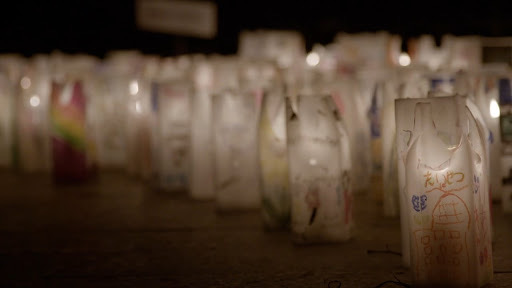
paper lanterns

When you watch a movie that resounds reconciliation, peace, love and forgiveness without ever hearing the words being mentioned, it is pretty hard to know where to start to gather one’s thoughts to scribble about it.  I am writing this as a record for myself and if anyone else reads it – may you be blessed.

These are Covid times, the screening of Paper Lanterns organised by the Japanese Anglican community was on Zoom. 

I had a recent memory of watching the 75th anniversary of Hiroshima bombings on the news; how dignified, pristine and orderly the gathering was, commemorating a horrific incident that took place in their country at the end of WWII. This part of world history did not feature too extensively in my learning in school, so I was curious when Yuki, a fellow Anglican invited me to the screening.

When the ‘A bomb’ fell on Hiroshima at 8.15 on 6 August 1945, Shigeaki Mori was an eight year old. His life was saved whilst some of his close family perished in the nuclear cloud that enveloped that region.  He had just moved schools, and the one he just left was marooned with all teachers and children perishing in a flash. The carnage he witnessed as a child, now immortalised as paintings and drawings in the Hiroshima Peace Memorial Museum formed part of the film. I have seen artwork of horror, but nothing can compare to these illustrations of human life melting away in the aftermath of the bomb. They were unapologetically gruesome, yet had huge artistic merit. The music composed by Chad Cannon was a fusion of Western and Japanese sounds and captured the sentiments that conjures up in you as a viewer.

Mr Mori was a gifted researcher and was more than curious of the history of this world event of which he was a part as a young boy. Along with the 140,000 Japanese people who perished in Hiroshima, there were 12 American POW’s who were captured by the Japanese army when their bomber Lonesome Lady crashed near Ikachi. Mr Mori was fuelled with compassion for the families of these 12 POW’s who he was convinced, knew nothing about the last moments of their loved ones’ lives ending in Hiroshima. This led him to delve into numerous historical records and copious amounts of letter writing scouring all 50 States in the US to find the next of kin of these 12 young men who lost their lives – it took him 40+ years!

There were two young men out of the 12 who survived the bombing, and were re-captured by the Japanese army. They were found to be extremely week and unwell. These men were taken to a doctor who tried to attend to them but they had all the signs and symptoms of nuclear radiation and died soon after. The men were given a proper burial, and in the film you see their families visiting the place where the hospital stood, now marked with a memorial plaque. The dignity offered to the enemy in such dire situations is palpable in the movie. Mr Mori’s efforts of finding the families of these POW’s have brought people together from across the United States who never knew each other before.

It was heart rending to hear them say that when they visited the village where the plane came down and met other Japanese people whose lives had been impacted by the bomb, there was absolutely no sense of anger or the expectation to hear the words of apology or repentance.  They only wanted acknowledgement that it happened and that it will not happen again and that both sides will not forget the effect nuclear war has on life.

The Director of the movie, Barry Frechette was present at the viewing, and was able to talk us through the making of the film, which he said was more fulfilling than seeing the finished product. The extraordinary people he met and visiting places that were once decimated, now flourishing with life gave hope for humanity.

The film captures the 2016 memorial service at Hiroshima when President Obama visited. Mr Mori is seen hugging the President after being honoured for his efforts in his memorial speech. A scene I recall on the news as it was only 4 years ago.  If only I knew then the depth of love, commitment and the reconciliatory spirit this human being had, I would have savoured the news item much more.

When there were celebrations of the end of the war, the families of US POW’s who were marked as ‘missing in action’ could not join in the celebrations not knowing the whereabouts of their loved ones. The efforts of one single man who was dedicated to helping total strangers, foreigners who were the oppressors, who lost loved ones in his country find closure, is a feat that needs shouting about; and Paper Lanterns depicted this so beautifully with no bias assigned to either side – just showing the people and the events as they were.

Now an octogenarian, one would imagine Mr Mori would want to put his feet up and relax after the fulfilment of a life long project – but no, his attention has moved to Nagasaki and the POWs who perished there…..! 

to the memory of the 12 POWs

Durden Looper
Joseph Dubinsky
James Ryan
Julius Molner
Hugh Atkinson
Charles Baumgartner
John Long
Raymond Porter
Burford Ellison
John Hantshell
Norman Brisette
Ralph Neal

guess who’s coming to dinner?

I was recently introduced to Ignatian spirituality and a weekly meditation session organised by the Jesuits in London.

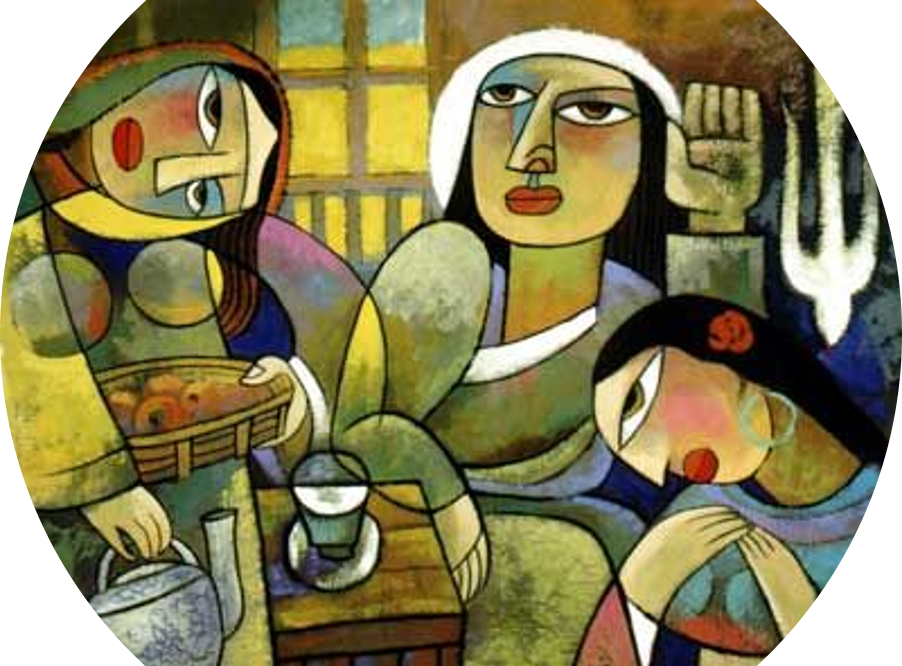
At a recent meditation session we reflected on Luke 10 and the story of Martha and Mary with Jesus visiting their home. We used this picture by Dr He Qi to meditate and enter into the story, and I invite you to join me.

Both in the text and the picture I see two women- both devoted to Jesus.  One showing her devotion through preparing to treat Jesus when he visits with the best possible meal and care given in Bethany and the other falling at his feet in worship.

Martha would have painstakingly given full attention to seeing that everything was perfect for her Lord. The tea would be served at the right temperature, bread freshly baked and not allowed to get stale in the hot Middle Eastern climate.  Pomegranates freshly picked and washed and clean.  Tables dusted, linen fresh and the floor swept clean so that when Jesus walked in with his bare feet after leaving his sandals at the door after cleaning his feet, it felt clean to tread on.  Martha loves the Lord.  He is still her first love, she has pondered on it long and hard and had that assurance in her heart – and now it was her turn to show gratitude in an earthly sense.  Worship him with her time and meticulous care of hospitality that is world class yet personal. 

Mary on the other hand falls down in worship at the feet of Jesus and does not move.  She is oblivious to the hospitality that her older sister is so engrossed in providing for their special guest.  Mary is still so deeply moved by the gift of salvation she has received from Jesus.  Her sins forgiven and set free.  How can she give any attention anywhere else than to this man who has given her new life!  She loves her sister, but this moment is too precious, far too precious to be doing anything else. In any case, did Jesus not look after the earthly needs of his followers without them having to tarry so much – has Martha forgotten this?!

Martha is surprised of Mary’s lack of attention to making their guest feel comfortable and draws Jesus’ attention to this.  Martha must carry the burden of running the family home being the older female sibling.  Why does she not complain about Lazarus not helping? Is this cultural? Is it the responsibility of an older female child to attend to the practicalities of a household?  Martha in that sense was not abdicating her duty – is this admirable?

Martha, Martha”. Jesus calls out to her twice by her name.  Martha must have felt special although what followed would have taken her aback. “You are worried and upset about many things, but few things are needed – or indeed only one.  Mary has chosen what is better, and it will not be taken away from her.”

We are not told of Martha’s reaction in the text or what happened afterwards.  Did Martha feel rejected or was she reassured that whilst Jesus was appreciative of her efforts that he was giving Mary affirmation as she demonstrated her undivided devotion?  Did Jesus help Martha himself and get Mary to help eventually?  Was he saying to Martha that cultural expectations of an older sibling needs to be laid aside when it comes to worshiping the Saviour?

Enough of my rhetoric.  Let’s look at the picture.

Both women’s eyes are turned towards Jesus in a reverential pose, but Jesus is looking ahead.  Possibly looking at you, asking you what you think?  Are you going to take sides or are you going to go deeper into the spirituality of the two women and where they are at in this story? 

Whatever the Spirit reveals to you, I sense that Jesus was challenging the accepted cultural norms.  That of a female child being left to take responsibility for hospitality – but oh no, not when Jesus is the guest.  Sitting at the feet of the guru was usually reserved for disciples who were all male, but Mary is now doing just that. Eagerly waiting for the Master to teach her things of the Father and eternity. Jesus affirms Mary, giving value to women who are hungry and thirsty for the Lord to come alongside their male counterparts to receive from him.  Magnificent, isn’t it?

a medieval english abbess and a pandemic

It was around 2008/09 that I received an email from Noeline Sanders, inviting a group of Sri Lankans to join a forum on issues relating to the Sri Lankan civil war, and the effect it bears in the diaspora community in London and the UK. The venue advertised was St Ethelburga’s church in Bishopsgate, City of London.  I made the journey to Bishopsgate one evening not knowing then how much it would change my life.

The world is currently in lockdown due to the coronavirus pandemic, which reminds me of the story of St Ethelburga that I have heard whilst visiting the church. Much like the current coronavirus pandemic, the Plague (c. 664 AD) killed thousands of people in the British Isles, targeting those in the south of the country. 

During this period, St Ethelburga was gifted land in Barking by her brother St Earconwald for the purposes of building a monastery.  (St Earconwald, who later became the Bishop of London, had his own monastery for male monks.) St Ethelburga became the first abbess of Barking Abbey who went on to dedicate her life to the poor and those affected by the dreadful plague.  The Venerable Bede is known to have said St Ethelburga was “upright in life and constantly planning for the needs of her community”.

It is known that the Abbess, at the time of the Plague, encouraged the nuns to step out of the monastery into the community to serve the sick and the dying, knowing the risks involved for themselves. The Plague took the life of the great Saint as well as others in the monastery. The ethos of putting values into action is one of the four key principles of the mission of St Ethelburga even today.

Founded c. 666 AD, the monastery was a place for prominent women in society to take up holy orders in the event they sought freedom from societal norms, such as arranged marriages or in some instances, their families bartering their lives for the release of English prisoners! A dowry for admission to the monastery would usually be paid by a wealthy benefactor.  A royal connection is known to have paid the admission dowry to the Abbey for Elizabeth Chaucer, the daughter of the poet Geoffrey Chaucer. The list of nuns associated with the Abbey confirms a connection between the monastery, and royalty and gentry. A decision by the 10th century Archbishop of Canterbury, St Dunstan made Barking Abbey follow the Rule of St Benedict.  The Abbey was one of the richest in the country in that time and continued its monastic traditions for nearly 900 years. 

The medieval church of St Ethelburga is dedicated to the Abbess of Barking and dates back to 1250, while having survived the Great Fire of London in 1666 and the Blitz of WWII. The church was extensively damaged by an IRA bomb in 1993 but did not at that time have any insurance cover and closed for several years. It was under the leadership and vision of the then Bishop of London, Richard Chartres, that the church re-opened in 2002 as a Centre for Peace and Reconciliation. 

Once the largest building in Bishopsgate now stands small compared to the Gherkin and other skyscrapers in the financial centre of London. However small in size, the longevity of its legacy and the global reach of its work cannot be matched to the value of all the hedge funds and million-dollar deals that occur in its vicinity.

Everything about the church represents St Ethelburga as a saint; great foresight, leadership and above all, compassion. The church continued with this legacy and ‘achieved notoriety as one of the few churches in which divorced people could remarry, in defiance of the Bishop’s strictures’.

The Plague of c.664 AD lasted nearly 25 years. Let us hope and pray that the current pandemic will be over in a much shorter space of time. 

Getting to know some great like-minded Sri Lankan women of all faiths, sitting round in the Tent a decade ago, while discussing matters that affect our lives under the auspices of a female English medieval Saint has been a privilege.  (The Bedouin tent that sits at the back of the church is a must see if you are visiting the City of London). St Ethelburga’s legacy has made it possible for a plethora of fora such as our’s to meet. It is a place where attributes of other cultures are celebrated and valued.  Enjoying food, dance and music and poetry of other cultures and social mingling of people who would never otherwise have engaged with one another yet live in the same city is a jewel in the crown that St Ethelburga has facilitated.

I am thankful for the space St Ethleburga provides for those on the margins of society; the foreigner, the stranger, the refugee. It facilitates a space for dialogue  that which could destroy people and communities and helps to birth renewed vision and energy, and is a place that connects strangers and builds meaningful friendship across faith, culture and other social divides.

This long association with St Ethelburga pointed me to participate in one of the church’s collaborative project areas in 2019 The Journey of Hope Pilgrimage where I met some amazing people from around Britain. We travelled together and learned from the centres of reconciliation in mainland Britain and Northern Ireland. I am grateful for the original connections made by Noeline who also now serves as a Trustee of St Ethelburga community.

The Listening to each other: Listening to Earth programme responds to the urgent need for climate justice issues and sanctity of the earth and combines nurturing leadership of people of colour. Based in the country’s financial capital, St Ethelburga encourages financial institutions to take responsibility when navigating turbulent times. A guiding principle of the programmes is seeing crisis as opportunity whilst building community across differences and protecting the sacred.  More can be found here.

The work of St Ethelburga’s Centre for Peace and Reconciliation is prophetic and relevant more so today than ever.